

Quick Summary
Composite doors are the stronger all-round option: thicker, better insulated, more secure, and available in a wider range of styles. uPVC doors cost less upfront and remain a practical choice where budget is the main consideration. The right decision depends on your property, your priorities, and how long you want the door to last.
You have decided the front door needs replacing. Maybe it is letting in cold air, maybe it is looking tired, or maybe you want a stronger first impression before putting the property on the market. Either way, you have narrowed it down to two options: composite or uPVC.
Both are popular choices for good reason. Both are weatherproof, low-maintenance, and available in a wide range of styles and colours. The price gap between them has also closed more than most people expect. So how do you actually decide?
This guide works through the key differences between composite and uPVC front doors across the factors that matter most: security, thermal performance, durability, appearance, and cost. By the end, you will have a clear sense of which type suits your home and your situation.
If you are also thinking about the timing of your replacement project, our guide to the best time to replace windows and doors is worth a read before you book a survey.
What is a composite front door?
Composite doors take their name from how they are built: multiple materials combined into a single construction, each chosen for what it does best. The result is a door that outperforms any single-material alternative on most measures.
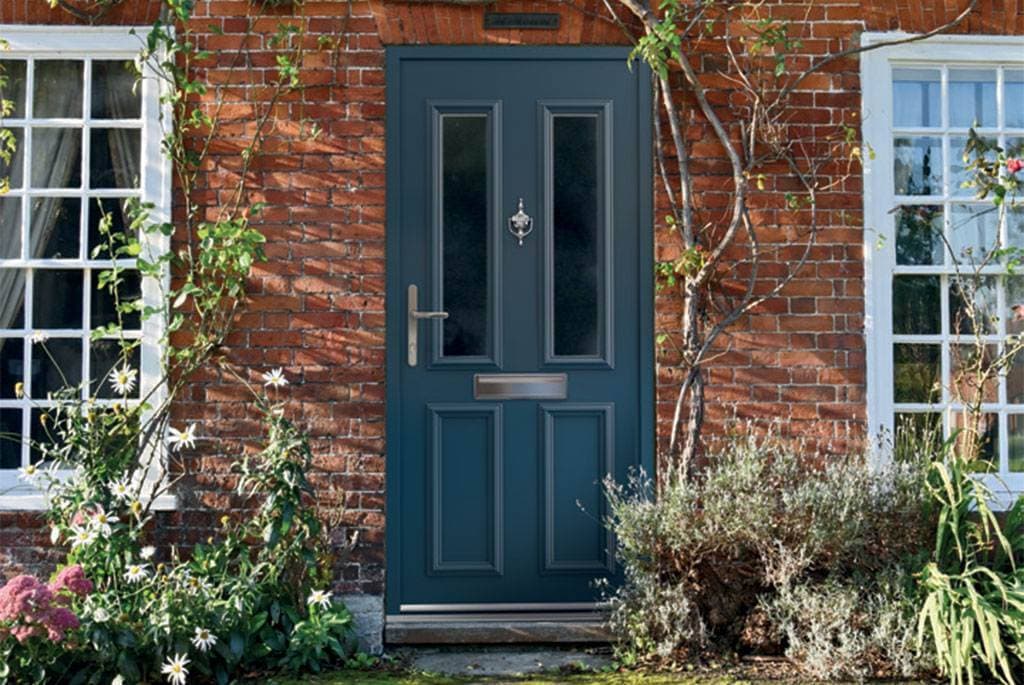
How composite doors are made
A composite front door is built around a solid timber core, set within a uPVC or aluminium frame and filled with high-density polyurethane foam insulation. The outer skin is made from glass-reinforced plastic, commonly referred to as GRP. That GRP skin gives the door its rigidity, its finish, and its resistance to whatever the British weather can throw at it.
Most composite doors sit at 44mm thick. Premium ranges go up to 70mm, which is noticeably heavier and more substantial when you open and close it. That weight is part of what makes a composite door feel premium at the doorstep.
What composite doors look like
Because the GRP skin can be moulded and textured, composite doors are available in a wide range of styles: four-panel traditional designs, contemporary flush doors, farmhouse styles with half-glazed panels, and period designs suited to older properties.
Composite doors can also be finished in different colours on the inside and outside faces, which is useful when your interior and exterior palettes do not match. You can browse the full selection of styles, configurations, and colour options in the Hallmark composite door brochure.
What is a uPVC front door?
uPVC has been the standard choice for replacement doors in the UK for several decades. It remains a practical and dependable option for a wide range of properties.
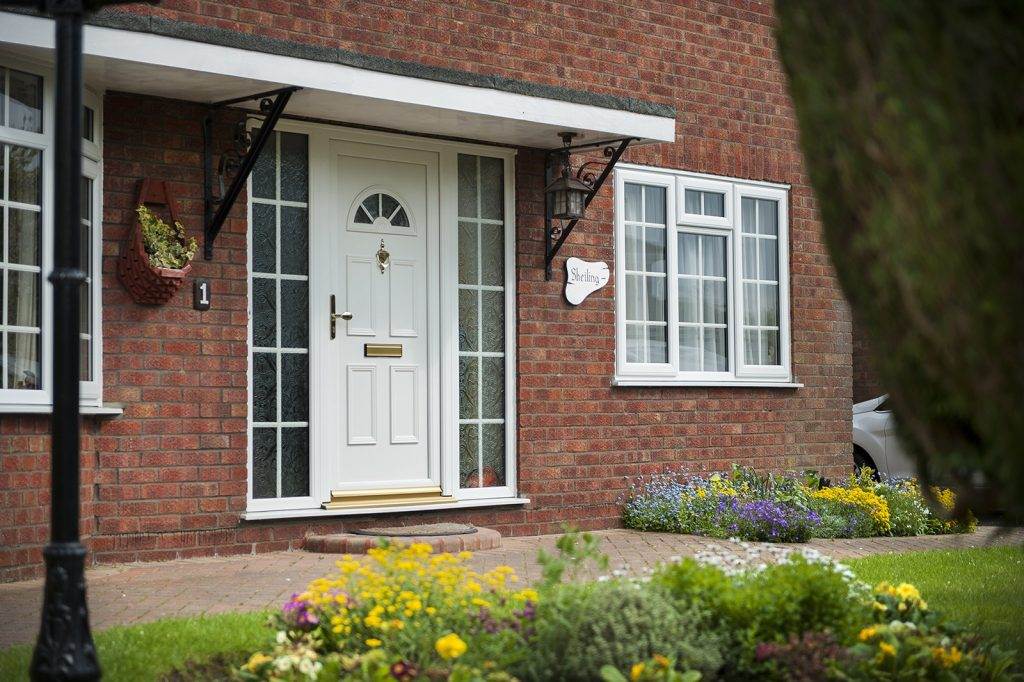
How uPVC doors are made
A uPVC front door uses a hollow multi-chamber profile, reinforced internally with steel or aluminium for rigidity and resistance to forced entry. The chambers trap air and reduce heat transfer, though the overall thermal performance sits below what a foam-filled composite achieves. Most uPVC front doors are around 28mm thick, noticeably lighter and less solid in feel than a composite equivalent.
Modern uPVC profiles are significantly better than those installed 15 or 20 years ago. Improved tolerances, better weatherseals, and multi-point locking systems mean a well-fitted uPVC door performs reliably for many years.
What uPVC doors look like
The design range is more limited than composite. Woodgrain foil finishes are available but tend to look less convincing up close than the moulded GRP skin of a composite door. Colour options have expanded considerably in recent years, and the overall aesthetic suits modern and utilitarian properties more naturally than period homes.
For an overview of the uPVC options available from Cristal Windows, take a look at our uPVC front doors range.
Composite vs uPVC front doors compared
Here is how the two options compare across the factors that matter most when choosing a front door.
Security
Composite doors have a structural advantage. The solid timber core resists drilling, flexing, and forced entry in a way that a hollow uPVC profile cannot fully replicate. Both types can be fitted with multi-point locking systems, and both can achieve PAS 24, the industry security benchmark that insurers and Building Regulations increasingly reference.
A well-specified uPVC door with quality locking hardware is a secure door. A composite door with the same hardware is a more secure door. If security is your primary concern, the structural advantage sits clearly with composite.
Thermal performance
The foam-filled core of a composite door gives it a meaningful thermal advantage over a standard uPVC alternative. A quality composite door typically achieves a U-value of 1.0 W/m²K or below. uPVC doors with air-filled chambers tend to sit higher than that.
In practice, a well-installed door of either type will make a significant improvement over an older door that has been in place for 15 or 20 years. But if reducing heat loss through the front door is the priority, composite delivers the better result.
Durability and lifespan
The GRP outer skin of a composite door is genuinely resistant to the conditions that age other materials: UV exposure, moisture, temperature fluctuation, and impact. It will not warp, crack, swell, or fade in the way that older uPVC can. Most composite doors carry a 10-year guarantee, and many continue to perform well beyond that.
uPVC holds up considerably better than timber, but it is more susceptible to yellowing and warping over time, particularly on south-facing aspects that receive sustained direct sunlight. A uPVC door installed today is better than those of a decade ago, but composite still has the durability advantage over a long timescale.
Appearance and kerb appeal
This is where the difference becomes most visible. A composite door, with its GRP skin, solid feel, and substantial close, reads as a premium product at the doorstep.
On a street of Victorian or Edwardian semis, a composite door in a traditional colour with period ironmongery will look like it belongs. A uPVC door in the same setting will rarely achieve the same effect, even in a woodgrain finish. The weight, the texture, and the way the door sits in its frame all contribute to an impression that uPVC struggles to replicate.
For modern and new-build properties, both can work well. Contemporary composite styles with flush panels and dark frames suit current architectural trends convincingly. A well-chosen uPVC door with a modern profile is also a reasonable fit. In that setting, the decision comes down to priorities rather than aesthetics.
Maintenance
Both composite and uPVC front doors are low-maintenance compared to timber. Neither needs painting, staining, or treating. A wipe-down with a damp cloth, annual lubrication of the locking mechanism, and a check of the weatherseals once a year is sufficient for either type.
uPVC hinges can require more attention over time. Composite doors, because of the materials and construction, tend to hold their tolerances more consistently across the longer term.
Cost
uPVC front doors cost less upfront. The size of that difference varies by specification, style, and supplier, but composite doors carry a premium that reflects the materials and manufacturing involved.
That gap narrows when you account for lifespan, energy savings over time, and the effect a well-chosen composite door can have on a property’s kerb appeal and resale value. Both options are an investment rather than a simple purchase. For an accurate figure for your home, the most useful step is to request a free survey and quote.
Which type of front door suits your home?
The right choice depends on your property, your budget, and what you are prioritising. Here is how to think through it.
Period and character properties
For Victorian, Edwardian, and interwar properties, composite is the stronger choice. These homes benefit from a door with visual weight and period detail, and composite delivers both. A four-panel composite in Chartwell Green or Anthracite Grey with traditional ironmongery will sit far more sympathetically against older brickwork than a uPVC equivalent, even one finished in a woodgrain foil.
Modern and new-build homes
Both types can work well here. A contemporary composite with a flush panel and dark frame suits new-build aesthetics convincingly. A uPVC door with a modern profile is also a reasonable fit, and the budget saving can be directed elsewhere in the project. In this setting, the choice is genuinely more about priorities than appearance.
If budget is the primary consideration
A quality uPVC front door is not a compromise choice. It meets current Building Regulations on both security and thermal performance, and it will serve reliably for many years. If composite sits outside your budget for this project, a well-specified uPVC door fitted by an experienced installer is a sound decision. The honest answer is that both are good products at different price points.
Why choose Cristal Windows for your front door?
Cristal Windows supplies and installs both composite and uPVC front doors for homeowners across Hampshire, Surrey, and Berkshire. With more than 40 years of trading history, FENSA registration, and Which? Trusted Trader status, the focus is always on recommending the right door for the right property rather than steering towards one product over another.
The Hallmark composite door range offers a broad selection of styles, configurations, and colour options suited to a wide variety of Hampshire properties. You can download the Hallmark composite door brochure to explore the full range ahead of your survey.
For a full overview of composite door options available from Cristal Windows, visit our composite front doors page.
An in-home survey is the most practical way to compare options. We bring samples to your property, talk through the differences in person, and provide a clear, no-obligation quote for whichever option suits your home best.
Ready to choose your front door?
Both composite and uPVC front doors are well-suited to Hampshire homes when they are properly specified and correctly fitted. The difference comes down to priorities: composite leads on security, insulation, durability, and kerb appeal; uPVC leads on upfront cost.
If you are still weighing up the two options, the Cristal Windows team is happy to help. Get in touch to book a free survey and we will bring samples to your home, talk through the practical differences, and provide a clear quote for whichever option suits you best.